One of the technology areas within Dr. Lavian's telecommunications and network communications expert witness practice. Curriculum Vitae (PDF) · Case history · +1 (408) 209-9112
Internet Expert Witness — Patent Litigation & Technical Consulting
Dr. Tal Lavian, Ph.D. is an internet expert witness retained in patent litigation and technology disputes involving Internet protocols, web application architectures, and network communications. Dr. Tal Lavian serves as an internet expert witness in patent litigation, PTAB inter partes review (IPR) proceedings, and ITC Section 337 investigations involving Internet technologies, web application architectures, and network communications. As a telecommunications expert witness, he provides technical analysis covering Internet and web technologies, standards, and protocols. His expertise covers Internet protocols including the TCP/IP suite, TCP, UDP, IP, MAC, Ethernet, 802.3, network protocols, network software applications, and data link, network, and transport layers (L2, L3, L4).
Representative internet matters include EIT v. Yelp, Walker Digital v. Google, IP Innovation v. Google, and Site Update v. Accor.
Dr. Lavian has provided expert analysis in internet technology cases involving web application architectures, e-commerce systems, Internet routing protocols, DNS, HTTP/HTTPS, distributed network services, and web reservation systems. His internet technology case work includes Proxyconn, Inc. v. Microsoft (U.S. Patent Nos. 6,757,717 and 6,370,646, involving internet proxy and caching technologies), Walker Digital v. Google (U.S. Patent Nos. 5,884,270 and 5,884,272, involving internet-based systems), and EIT v. Yelp (U.S. Patent Nos. 6,594,765 and 6,081,786, involving web application technologies). His cases in this area have included proceedings before U.S. federal district courts and the USPTO PTAB.
Dr. Lavian holds a Ph.D. in Computer Science from the University of California, Berkeley, specializing in network communications. He is the inventor of more than 120 patents and has been retained as expert witness in more than 90 cases before U.S. federal courts, the USPTO Patent Trial and Appeal Board (PTAB), and the International Trade Commission (ITC). He has nearly 20 years of experience researching, studying, and lecturing at UC Berkeley. Dr. Lavian's peer-reviewed publications are indexed on Google Scholar.
His background includes a Ph.D. from UC Berkeley specializing in network communications, over 120 patents (many covering internet communication systems), and nearly 20 years researching, studying, and lecturing at UC Berkeley, where his work included research in data centers (RAD Labs), network service architecture (SAHARA), and wireless systems (ICEBERG).
Internet Technologies Expert
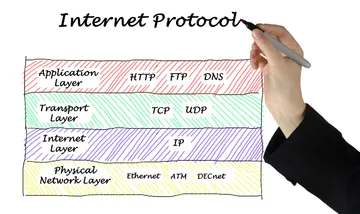
The Internet, first conceived as a military communication system, has grown over the past 30 years into a global network connecting billions of devices. The various protocols of the Internet and its applications have become increasingly complex in recent years. This complexity enables the Internet to span diverse networks and device types, but it also challenges network administrators and users, typically addressed by network management tools and automation.
The Internet is an example of interconnected computer networks that use the Internet protocol suite (TCP/IP) to communicate between many data networks, computer networks, and devices. In network communications, packet switching is the underlying mechanism for grouping data transmitted over a digital network into packets.
TCP/IP Protocol Suite in Patent Cases
The TCP/IP protocol suite — spanning the Application, Transport, Network, and Data Link layers — is at the center of many internet technology patent disputes. Patent claims in this area often involve specific protocol behaviors such as TCP handshake sequences, HTTP request/response flows, DNS resolution steps, IP routing decisions, and data link framing.
Dr. Lavian's experience with TCP/IP in litigation includes cases involving internet protocol implementations, web services architectures, network security protocols (IPSec, SSL/TLS), and distributed computing systems. His 120+ patents include inventions in network communications protocols, and his doctoral research at UC Berkeley focused on network communications and the TCP/IP protocol suite.
In patent analysis, understanding the boundaries between protocol layers is often critical to claim construction — for example, distinguishing between transport-layer (TCP/UDP) and application-layer (HTTP/SIP) functionality, or between network-layer routing and data-link switching.
Network Protocols
Network protocols operate across the layers of the TCP/IP stack — from data link and network layers handling packet addressing and routing, to transport and application layers managing end-to-end delivery and services. In patent litigation, understanding how protocols interact across these layers is often central to claim construction and infringement analysis.
Dr. Lavian's expertise covers both the protocol specifications (as defined in IEEE standards and IETF RFCs) and their implementation in commercial network equipment — including routers, switches, firewalls, and application-layer devices.
Internet and Web Expert - Internet Protocols (TCP/IP)
- Internet protocols, TCP/IP protocol suite, TCP, UDP, IP, MAC, ARP/RARP, BOOTP IPv4, IPv6, and IPSec.
- Ethernet, 802.3, Physical Layer, PHY, MAC, Data Link, Network, and Transport layers (L2, L3, L4), Frame, Datagram, Packet, Session.
- Internet and web expert, Network protocols, Broadband, ICMP, IGMP, ARP, ARQ, HARQ.
- Network architecture, system, network configuration, and network management.
- Internet technologies, HTTP, DNS, DHCP, NNTP, VPN SIP, and RTP.
- Network protocols e-mail, SMTP, POP, IMAP, FTP, Telnet, SSH, and SNMP.
- Architecture and Cloud Computing, Web applications, client-server, cloud computing, distributed computing, peer-to-peer networking, virtual private networks, tunneling, content networking, network security, and mobile applications.
- Programming languages, Communications Software, Java, C/C++, software APIs, network configuration and scripting, and network management.
- Web technologies, cloud communications, distributed applications, and distributed computing.
Internet Applications and Web Services
Dr. Lavian's internet technology expertise covers web applications, client-server architectures, cloud computing (IaaS, PaaS, SaaS), distributed computing, web services, and internet software architecture. His experience includes cases involving e-commerce platforms, web reservation systems, internet-based data retrieval, and distributed network services.
He has also worked on cases involving cloud computing infrastructure, including service delivery architectures on platforms such as Amazon Web Services (AWS) and Google Cloud Platform (GCP). Dr. Lavian has hands-on experience designing and deploying cloud-based systems, having built cloud services on both AWS and GCP during his work at UC Berkeley's SkyDeck startups.

Internet Applications and Web Services Expert
The following are Dr. Lavian’s areas of expertise in Internet applications and Web services:
- Internet Protocol (IP), IP Sockets, TCP/IP, UDP.
- Internet and Web applications.
- Client-server, cloud computing, distributed computing.
- Web Services, Internet Applications, and Internet software architecture
- Security Groups, ACLs, Virtual Private Networks, Firewalls, and Network Balancers.
Cloud Computing and Distributed Systems
Cloud computing architectures — including Infrastructure-as-a-Service (IaaS), Platform-as-a-Service (PaaS), and Software-as-a-Service (SaaS) — are increasingly at the center of internet technology patent disputes. These cases often involve questions about service delivery architectures, virtualization, distributed storage, and API-based service integration.
Dr. Lavian's experience with cloud and distributed systems includes his doctoral research at UC Berkeley's RAD Lab (focused on data center architectures), his work deploying cloud services on AWS and GCP, and his involvement in cases involving distributed network services, web services architectures, and internet-based application platforms.
Internet Protocol Areas Covered
- TCP/IP and Internet Protocols
TCP, UDP, IP, IPv4, IPv6, IPSec, ICMP, ARP — the core protocols governing internet data transmission, addressing, and routing. Dr. Lavian's cases in this area have involved protocol-level claim construction and infringement analysis. - Network Security Protocols
SSL/TLS, IPSec, VPNs, firewalls, deep packet inspection, and content filtering. Dr. Lavian has provided expert analysis in network security cases involving firewall architectures and network access control systems. - HTTP and Web Technologies
HTTP/HTTPS, DNS, DHCP, web application architectures, client-server systems, and e-commerce platforms. His cases have included internet-based data retrieval, web reservation systems, and distributed web services. - Quality of Service (QoS)
Traffic prioritization mechanisms including DSCP, RSVP, and priority queuing — relevant in cases involving real-time internet applications and streaming services. - IoT and Connected Devices
Internet-connected device architectures, device-to-cloud communication protocols, mobile wireless systems, and smart device networking.
Internet Security and Network Layer Analysis
Internet security patent disputes frequently involve claims about how network protocols protect data in transit — covering TLS/SSL session establishment sequences, IPsec tunnel configuration, certificate validation chains, VPN architectures, and the integration of security protocols with application-layer systems such as HTTPS web services and API gateways. Dr. Lavian has analyzed internet security patents in federal court and PTAB proceedings, including cases involving network access control systems, encrypted communication protocols, and internet-layer packet filtering. His analysis draws on IETF security standards and commercial implementation practices in network and internet security products. For matters with a primary focus on enterprise network security architecture, see also his network security expert witness practice.
Frequently Asked Questions
What Internet technologies and protocol expertise does Dr. Lavian offer for patent litigation?
Dr. Lavian offers Internet technologies consulting covering TCP/IP protocol suites, HTTP/HTTPS, DNS, BGP routing, IPv4/IPv6 transition, web application architectures, and Internet security protocols in patent litigation matters.
Has Dr. Lavian testified in Internet technologies patent cases?
Yes. Dr. Lavian has provided expert reports, deposition testimony, and trial testimony in patent cases involving Internet technologies, TCP/IP protocols, web-based communication systems, and network-based application technologies in federal district courts and PTAB.
What is Dr. Lavian’s background in Internet technologies and TCP/IP?
Dr. Lavian holds a Ph.D. from UC Berkeley and has published peer-reviewed research on Internet protocols, TCP/IP, and network architecture. He has 120+ patents, many covering Internet communication systems, and has nearly 20 years of research experience at UC Berkeley.
What types of Internet patent disputes has Dr. Lavian handled?
Dr. Lavian has handled patent disputes involving web application architectures, content delivery networks, Internet routing protocols, TCP/IP implementations, DNS systems, HTTP request processing, network infrastructure, and Internet-connected device communications.
Why do attorneys choose Dr. Lavian as an Internet technologies expert?
Dr. Lavian holds a Ph.D. from UC Berkeley, has authored 25+ publications on Internet protocols and TCP/IP, holds 120+ patents, and has been retained in 90+ cases. He has experience both building Internet systems in industry and analyzing them in litigation, and has explained Internet technologies to judges and juries across federal courts and PTAB proceedings.
Can Dr. Lavian testify on Internet of Things (IoT) patent cases?
Yes. Dr. Lavian’s expertise in Internet protocols, network communications, and embedded systems enables him to provide expert testimony on IoT patent cases, including device-to-cloud architectures, IoT communication protocols, smart device networking, and Internet-connected systems.
What is an Internet expert and what cases require one?
An Internet expert is a technical specialist in Internet protocols (TCP/IP, HTTP, DNS), web technologies, and network architecture who provides analysis and testimony in legal proceedings. Cases requiring an Internet expert include patent infringement involving web technologies, cybersecurity breaches, Internet service disputes, and e-commerce platform litigation.
How does an Internet technologies expert analyze protocol-level patent claims?
An Internet technologies expert analyzes patent claims by mapping claim elements to specific protocol behaviors — such as TCP handshake sequences, HTTP request/response flows, DNS resolution steps, or BGP route advertisements. Dr. Lavian’s 120+ patents and academic research in TCP/IP enable him to provide protocol-level infringement and validity analyses.